
The Pronoia Archetypes
The Five Pronoia Archetypes
The Pronoia spectrum runs from paranoia to pronoia.
Paranoia is the orientation that life is happening to you. Pronoia is the orientation that life is happening for you. Most people aren't fully on either end. They land somewhere along the spectrum, holding a particular posture toward uncertainty, meaning, and what arrives.
There are five recognizable positions along this spectrum. Five archetypes. Each one has a strategy that worked at some point. Each one has a cost it stops noticing. Each one is being asked to do something specific to move forward.
If you haven't taken the quiz yet, you can find out where you really land here.
If you have, your archetype is below.
Jump to:
The Protector | The Analyst | The Witness | The Synchronist | The Alchemist


02
—
The Analyst
I’ll believe it when I see it.
You seek understanding. You question, you test. You look for patterns.


04
—
The Synchronist
It’s meant to be.
You notice timing. You follow the threads. You trust the unfolding.

The Protector
Trust no one.
You read rooms before you enter them. You hear what's underneath what people are saying. You catch the small shift in tone that no one else notices.
This isn't paranoia. It's training. Somewhere along the way you learned that vigilance was the difference between safe and not safe. Your nervous system has been holding that line ever since.
It's worked. You're here. You're functional. You've protected yourself, the people you love, the things you've built.
It's also exhausting.
The strategy: Safety through vigilance. You scan. You brace. You stay one step ahead. Most of the time you're ready before there's anything to be ready for.
The shadow: Vigilance only sees what it's looking for. The world keeps proving you right because you're trained to find evidence it's not safe. You miss the kindness because you're scanning for the catch.
The cost shows up in the body. Pain that won't quite settle. A jaw that grinds at night. Or in relationships, in the way you can't fully receive love from someone who hasn't yet earned every inch of your trust.
The deepest cost is the life that goes unlived. The risks you didn't take. The conversations you didn't have. The version of you that exists in some parallel reality where vigilance wasn't running the show.
The Analyst
I’ll believe it when I see it.
You think your way through almost everything. You weigh the variables. You read the room with logic, not just instinct. You make decisions by mapping the angles, anticipating the moves, gathering the data.
This is real. Your discernment has saved you from things other people walked straight into. You're the one your friends call when they need someone to think clearly about a hard situation. You don't get fooled easily.
You also don't get caught easily. Caught up in things, caught off guard, caught in the present moment without an exit strategy. Your mind is almost always slightly ahead of where your body is.
The strategy: Safety through control. The world is chaotic but manageable, and the way you manage it is by understanding it. You vet, you verify, you research, you plan. Trust isn't withheld; it's earned through evidence. If you have enough information, you can make the right call.
The shadow: The data is always incomplete. There's always one more variable to consider, one more angle to check, one more reason to wait. Pending safety becomes a permanent state. You're not in danger and you're not at peace. You're in the middle, calculating.
And some of the things that matter most can't be calculated. You can't logic your way into being moved. You can't analyze the meaning of an experience while you're still inside it. The data you're waiting for is the kind that only arrives in retrospect.
The cost is the moment that passes without you fully landing in it.
The Witness
It is what it is.
You've been around the block. You've seen people make meaning out of nothing, build stories out of coincidences, narrate their lives into shapes that don't quite fit. You've decided to stop doing that. Things happen. You note them. You move on.
This isn't cold. It's hard-won. You probably arrived here through real interior work. Maybe meditation. Maybe loss. Maybe a long stretch of watching other people exhaust themselves with drama and deciding you wanted no part of it. You've stopped making mountains out of moments. You've stopped letting your nervous system get hijacked by every small thing.
You're steady. People feel that around you. You don't react. You don't catastrophize. You don't spiritualize. The world is what it is.
The strategy: Safety through detachment. Events are neither for you nor against you; they simply are. The story is what hooks people, and you've stopped letting the story hook you. From this distance, almost nothing can hurt you the way it used to.
The shadow: Detachment is a defense disguised as wisdom.
That sentence might land hard. Sit with it. The position you've arrived at looks like enlightenment from the outside, and parts of it are. But there's a version of non-attachment that's actually a sophisticated bracing. You've stopped reacting to pain by also stopping yourself from reacting to joy. The grayscale is the cost. The peak experiences. Of connection. Of meaning. Of being undone by something beautiful. Those require a willingness to be moved. And being moved is what you've trained yourself out of.
You're safe. You're also slightly absent.
The Synchronist
It’s meant to be.
You've started to notice. The timing of things. The way people show up when you've been thinking about them. The way a conversation you needed arrives the same week you needed it. You're not naive about it. You're not announcing it. You're just paying attention.
Something has been shifting. You can feel that life is in some kind of dialogue with you, even if you can't yet say what it's saying. You watch for the patterns. You read the timing. You trust that what's emerging is meaningful, even when you don't have words for why.
This is a real opening. Most people don't get here. The fact that you're noticing at all is the practice beginning.
The strategy: Conscious participation. The world is responsive, and you're learning to listen. You watch for confirmation. You take signs seriously. You orient toward what feels alive.
The shadow: Trust is conditional on confirmation.
When the signs show up, you feel held. When they don't, you feel abandoned. A coincidence at the right moment lights you up. Silence in a hard week makes you wonder if you've been making the whole thing up. The orientation is real, but it's fragile. You're trusting life because it's been showing up. The harder question is whether you can keep trusting when it goes quiet.
There's also the risk of over-reading. Every event becomes a sign, every delay becomes a message, every conversation becomes a download. The mind that learned to scan for patterns can over-correct into finding patterns where there are none. The Synchronist's discipline is discerning the real signals from the noise without dismissing the signals altogether.
The Alchemist
This is exactly what I need.
You've lived something. That's the first thing.
The orientation you hold now didn't come from a book or a course. It came from being inside something hard enough that your old way of meeting life stopped working. You broke open. You stayed in the room. You kept choosing trust even when trust looked stupid from the outside. And somewhere in that process, the trust stopped being something you reached for and became the ground you stood on.
You're not naive. You're not bypassing. You don't say everything happens for a reason in the moment of pain because you know the lead has to be felt before it can become gold. You stay with the difficult thing. You give it the time it needs. And you've come to recognize, often only in retrospect, that life was working for you the whole time.
The strategy: Radical integration. Everything is raw material. The difficult, the beautiful, the unbearable, the ordinary. You don't fight what's happening. You meet it. You ask what it's asking of you. You move with it.
The shadow: Rushing the alchemy.
This is the thing to watch. The orientation you hold is real and earned, but the failure mode of every Alchemist is impatience with the lead. The temptation to call something gold before it's actually transformed. To skip past grief because you can already see the gift. To narrate the lesson before the wound has closed.
The Alchemist's discipline isn't trust. You already trust. The discipline is patience. Staying in the room with the fire when staying is the only thing that's asked, and the meaning will come when it comes, and not a moment before.
Five ways in. One place they lead.
I know this pattern because I lived it. For years I braced against everything, built a life I thought I could hold together, and held it until I couldn't. Then I lost it, publicly, and had to learn a different way to be.
The Pronoia Effect is the story of the shift every archetype is reaching for: from meeting life with caution to trusting it. It comes out October 6.
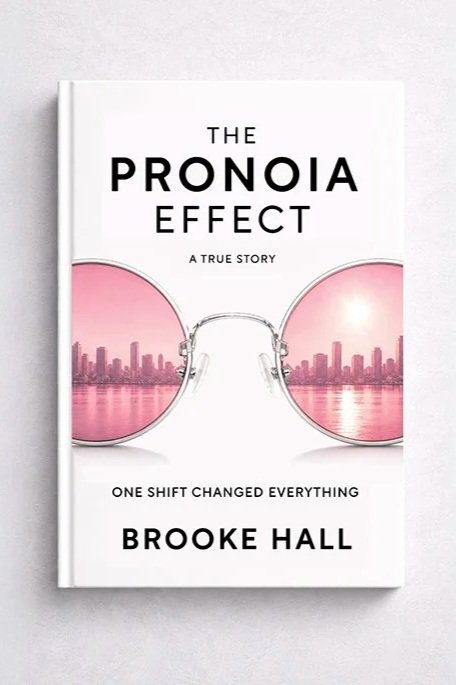
The Pronoia Effect
Coming October 6, 2026
The Pronoia Effect is the story of what happened when I stopped fighting the pattern I'd built my life around, and what I found on the other side of setting it down.
The first chapter is yours to read now.
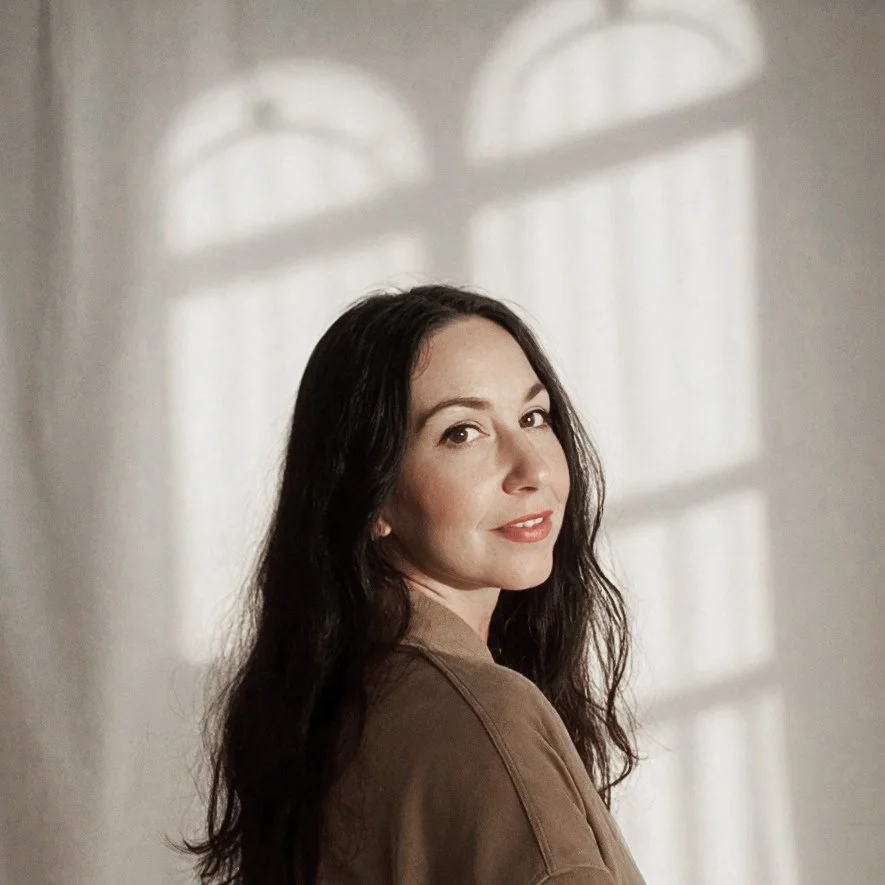
About the Author
⟡
Brooke Hall is the author of The Pronoia Effect, a true story about what it takes to trust life when everything you built falls apart.
She co-founded Light City, America's first large-scale light festival, and What Weekly, an online arts magazine in Baltimore.
A certified meditation teacher, Brooke explores trust, transformation, and the surprising intelligence hidden within our lives.
She is the founder of What Works Studio, a creative agency, and lives in Encinitas, California. The Pronoia Effect is her first book.